
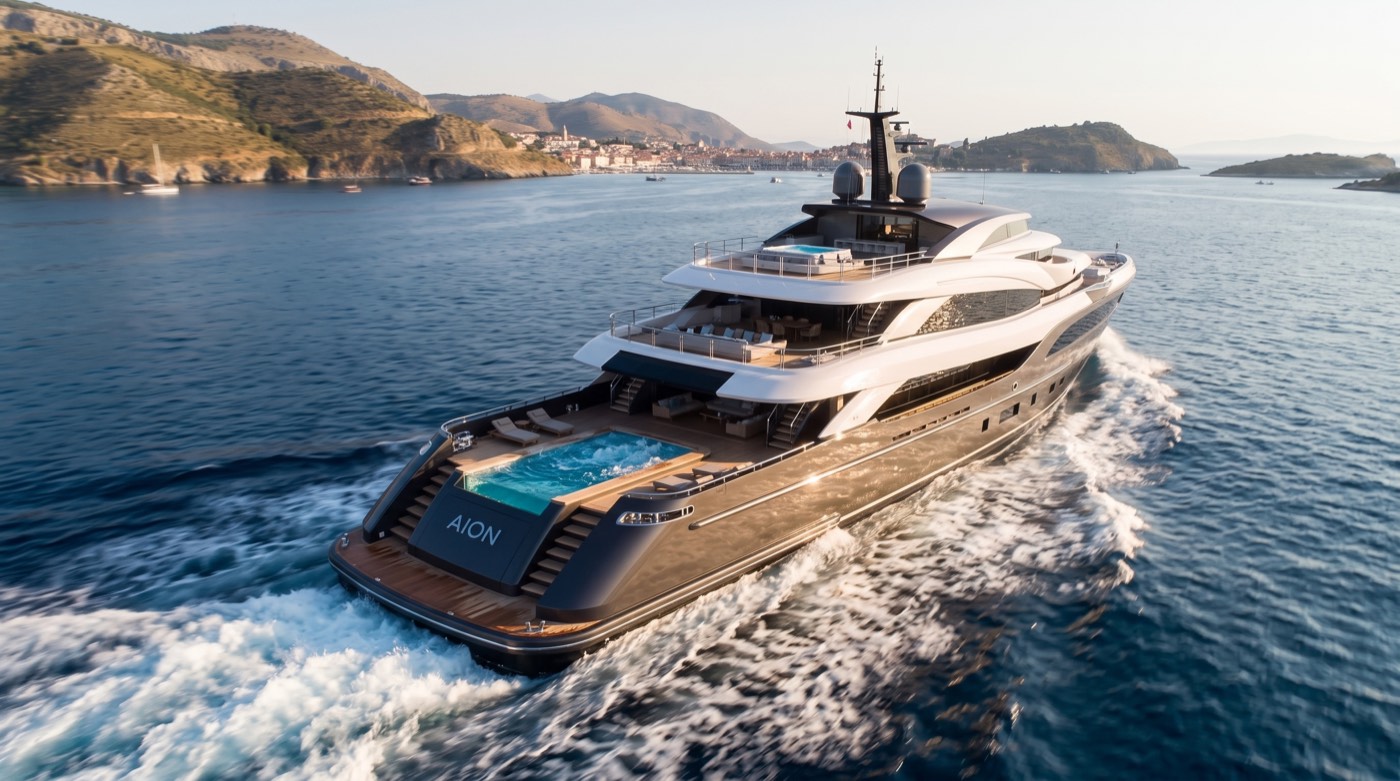
Yacht 3D rendering is the process of turning a digital 3D model of a yacht into photorealistic images, videos or interactive tours. It lets builders, designers and brokers show a vessel in full detail, often before construction starts. This guide explains what it is, how it works, who uses it, and why custom work from a specialized studio makes the difference.
What is yacht 3D rendering?
It is the creation of realistic computer-generated visuals of a yacht (its exterior, interior, details and surroundings) from a 3D model. The output can be still images, animated videos or a 360° virtual tour.
In simple terms, a 3D artist builds or receives a digital model of the boat, applies materials, sets up lighting and a scene, and then renders it. Rendering means software calculates how light hits every surface to produce a final image.
You'll also see related terms:
- Yacht visualization is the broader discipline of presenting a yacht visually, including renders, animation, VR and interactive tours.
- Yacht rendering is the shorter, everyday term, often used interchangeably with the full term.
- Luxury yacht rendering is high-end work for superyachts and premium builds, where materials, finishes and atmosphere must match the price point.
How does the 3D yacht rendering process work?
A typical project follows five steps:
- Brief and references. The client shares GA plans, CAD or 3D files, material boards, mood references and the goal of the visuals.
- 3D modeling. Artists build or clean up the hull, superstructure, deck hardware and interior from technical files.
- Materials and textures. Teak, lacquered wood, leather, stainless steel, glass, carbon fiber and fabrics are recreated to look and react to light like the real thing.
- Lighting and scene. The yacht is placed in an environment, such as a Mediterranean bay, a marina at dusk or open ocean, with realistic water, reflections and sky.
- Rendering and post-production. Final images are rendered in high resolution and refined for color, contrast and mood.
Common software includes 3ds Max, Blender, V-Ray, Corona and Unreal Engine. The tools matter less than the artist's eye and knowledge of boats.
What is yacht 3D rendering used for?
The key uses of yacht CGI fall into five groups:
- Design development and approval. Designers test proportions, colors and layouts and spot issues early, when changes are cheap. Owners approve finishes before construction.
- Pre-sales and new model launches. Shipyards can market and sell a yacht before it is built, using renders on websites, brochures and boat show stands.
- Brokerage and charter marketing. Brokers use renders to show refit plans, alternative interiors, or a yacht in settings where photography isn't practical.
- Refits and customization. Owners see a proposed new interior, paint scheme or deck layout on their own boat before committing.
- Investor and stakeholder presentations. A clear visual makes a concept easier to fund, approve and explain.
Who uses yacht 3D rendering?
Yacht renderings are used by anyone who needs to show a yacht that doesn't exist yet, or show an existing one at its best:
- Shipyards and builders use it for new models, hull launches and pre-sales.
- Naval architects and yacht designers use it to present concepts and win commissions.
- Interior designers use it to present cabins, salons and finishes to owners.
- Yacht brokers and charter companies use it for listings, refit proposals and campaigns.
- Owners and buyers use it to visualize a custom build or a refit.
- Marine equipment and furniture brands use it to show products in context on board.
- Marketing agencies and event organizers use it for boat shows, campaigns and social content.
What are the benefits of yacht 3D rendering?
The main benefits of 3D yacht visualization are speed, flexibility and earlier sales:
- Sell before you build. Buyers commit based on visuals, not a hull in the shed.
- Fewer costly mistakes. Design problems show up on screen, not in the shipyard.
- Faster decisions. Owners approve colors and materials when they can see them in context.
- One model, many outputs. The same 3D model feeds stills, videos, virtual tours and configurators.
- Consistent brand imagery. Every image follows the same light, mood and visual identity.
- No dependence on weather or location. The yacht can appear anywhere, in any season.
Why choose a specialized yacht 3D rendering studio?
A specialized studio brings both 3D skill and knowledge of the yacht industry. A general 3D studio can produce a good image, but a yacht specialist understands hull lines, deck hardware, how water reflects on gelcoat, and what an owner or broker expects to see.
Studios like Nautic Visuals focus on highly customized images for the yacht industry. Instead of generic templates or stock scenes, every image is built around the specific vessel, brand and audience. That is the main differentiator. The images are made to order, not pulled from a template.
Full personalization
With custom yacht 3D rendering, every element can be chosen:
- The exact hull color, livery and branding
- Interior layout, furniture and finishes
- Location, time of day, weather and sea state
- Camera angles that match the brand's visual identity
- Lifestyle elements such as people, tenders, water toys and table settings
Storytelling, not just pictures
The best yacht visualization tells a story, like sunrise at anchor, dinner on the aft deck or the owner's suite at night. Storytelling turns a technical object into an experience buyers can imagine themselves in. That emotional connection is what sells a luxury product.
Details and textures
In luxury yacht rendering, details carry the value. Think of the grain direction on teak decking, the stitching on leather upholstery, brushed versus polished steel, or the soft glow of ambient lighting on a lacquered ceiling. A specialized studio models and textures these at a level that holds up in close-ups and print.
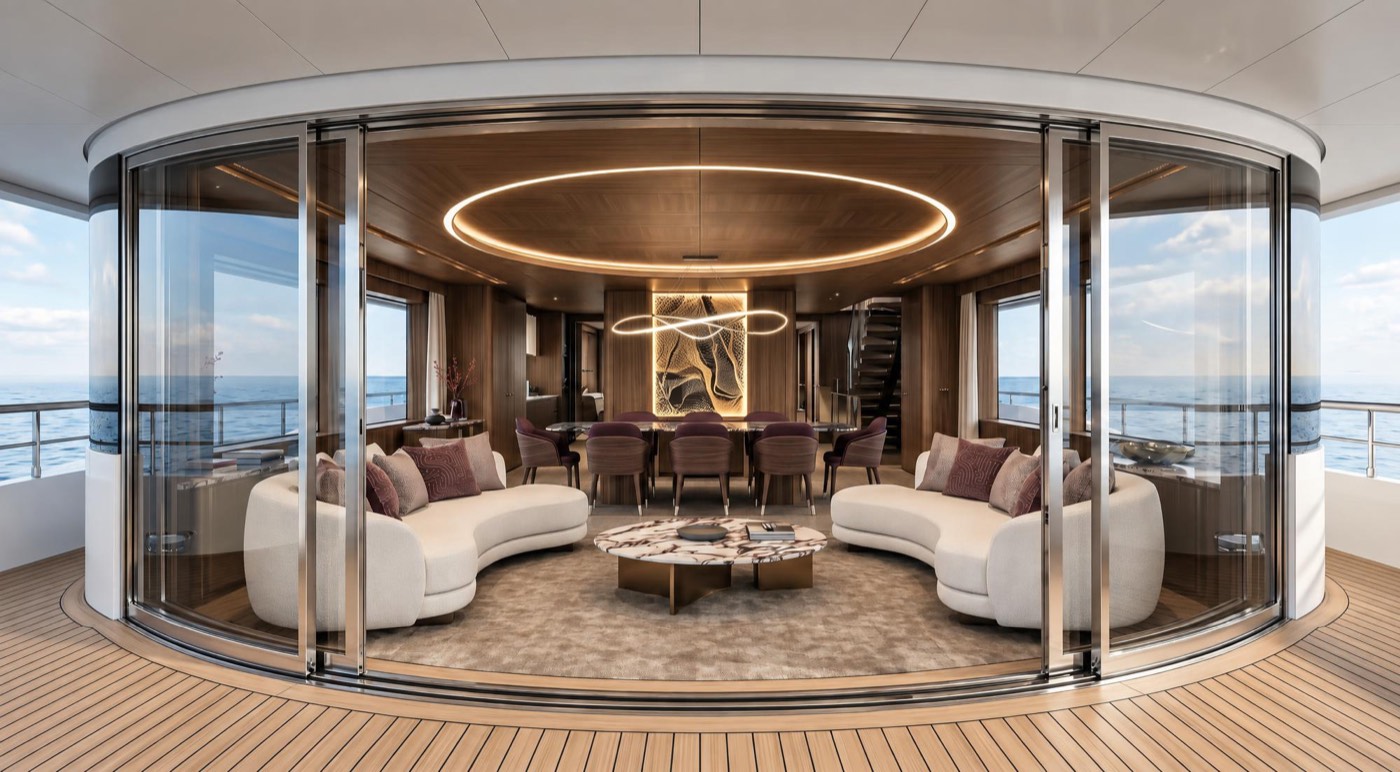
Interior design
Interior renders show salons, cabins, galleys and wheelhouses as if photographed. They let designers compare material options side by side and give owners confidence before signing off on costly finishes. Lighting scenes can also be tested, from bright daylight through large windows to a warm evening setting in the dining area, so the whole team agrees on the atmosphere before a single panel is installed.
Exterior images
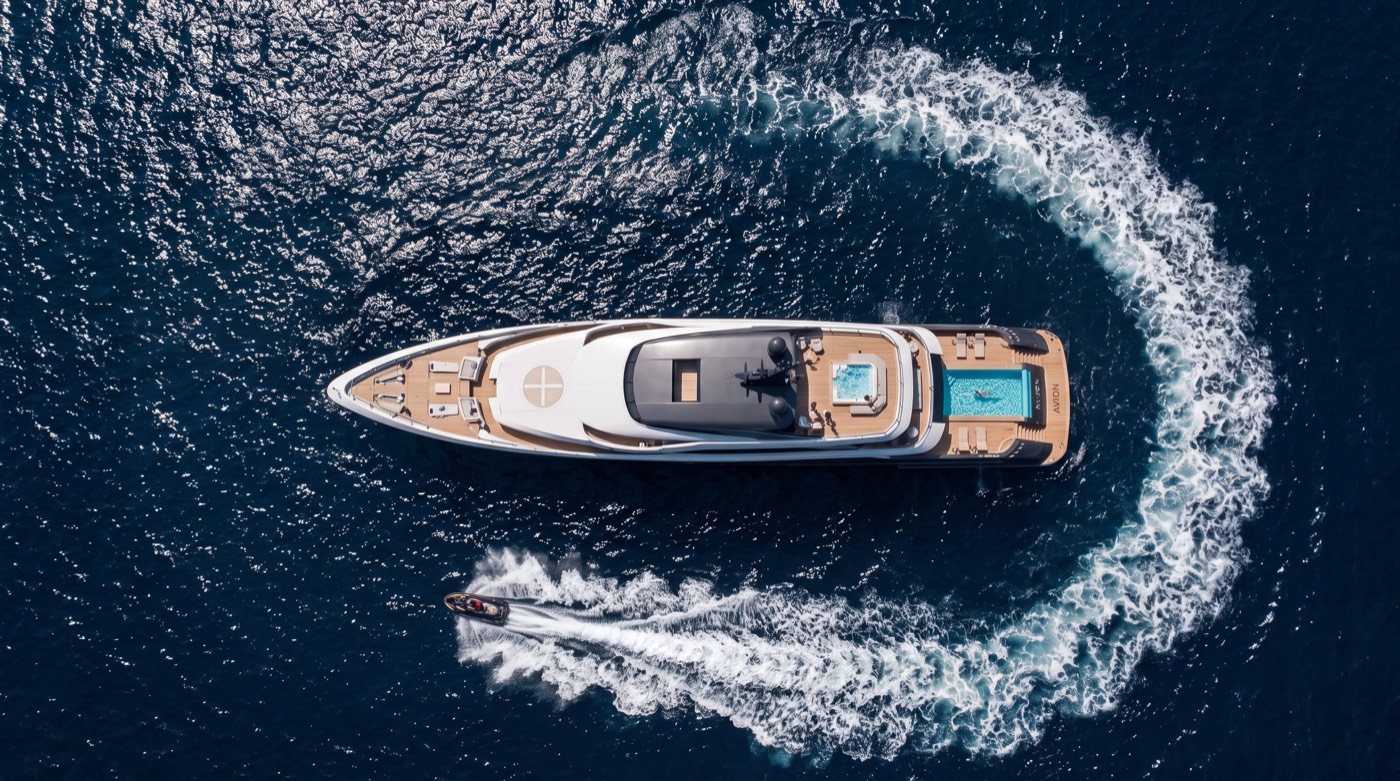
Exterior renders present the yacht's profile, deck spaces and presence on the water through running shots, aerial views, anchored scenes and marina settings. These images often become the hero visuals for websites, brochures and boat shows. Deck areas deserve the same attention as the hull. Sunpads, pools, beach clubs and bar areas are where owners picture themselves spending their time, so they are often the images that sell the lifestyle.
Immersive 3D yacht videos
A 3D yacht video is an animated sequence rendered from the same model as the still images. Cameras can fly around the hull, glide through the salon or follow the yacht at speed, shots that would need drones, helicopters and perfect weather in real life.
3D yacht videos are used for:
- Launch reveals and teaser campaigns
- Boat show screens and presentations
- Social media and paid ads
- Walkthroughs for remote buyers
Because the yacht is digital, a 3D video can show the boat before it exists, switch between two interior options, or move from day to night in a single shot.
What is a yacht 360 3D virtual tour?
A yacht 360 3D virtual tour is an interactive experience where viewers move through a rendered yacht and look around in 360 degrees from a browser, phone or VR headset. They click from the flybridge to the salon to the master cabin at their own pace.
Unlike a photo-based tour, a yacht 360 3D virtual tour built from CGI can exist before the yacht is built, and can be updated when the design changes. It is especially useful for:
- Selling new builds to buyers who can't visit the shipyard
- Charter listings that need to show layout and space clearly
- Comparing interior options during design approval
- Boat shows, where one headset can show a whole range
Yacht 3D rendering vs. photography
| Yacht 3D rendering | Photography | |
|---|---|---|
| Available before build | Yes | No |
| Change colors, interiors, location | Yes, in the file | Requires a reshoot |
| Weather and logistics | Not a factor | Major factor |
| Cost of new variants | Lower once the model exists | Full shoot each time |
| Shows the real, finished boat | Close representation | Yes |
Many brands use both, with yacht 3D rendering during design and pre-sales and photography once the yacht is delivered.
What makes a good yacht render?
A good render is accurate, believable and on-brand. Look for:
- Accurate proportions that match the naval architect's lines
- Realistic water, with correct reflections, wake and spray
- Convincing materials that hold up in close-up shots
- Natural lighting that suits the mood, from midday sun to blue hour
- A clear purpose, so each image sells a space, a feature or a feeling
When reviewing a studio's portfolio, zoom in. Luxury yacht rendering lives or dies in the details.